

BMJ Card Store
The complete card game store I license to shops, running in public.
- Client
- In-house platform
- Sector
- Product · Trading card e-commerce
- Year
- 2026
- Scope
- Product · Data model · UX/UI · Development
Platform demo. Nothing ships and no payment is taken.
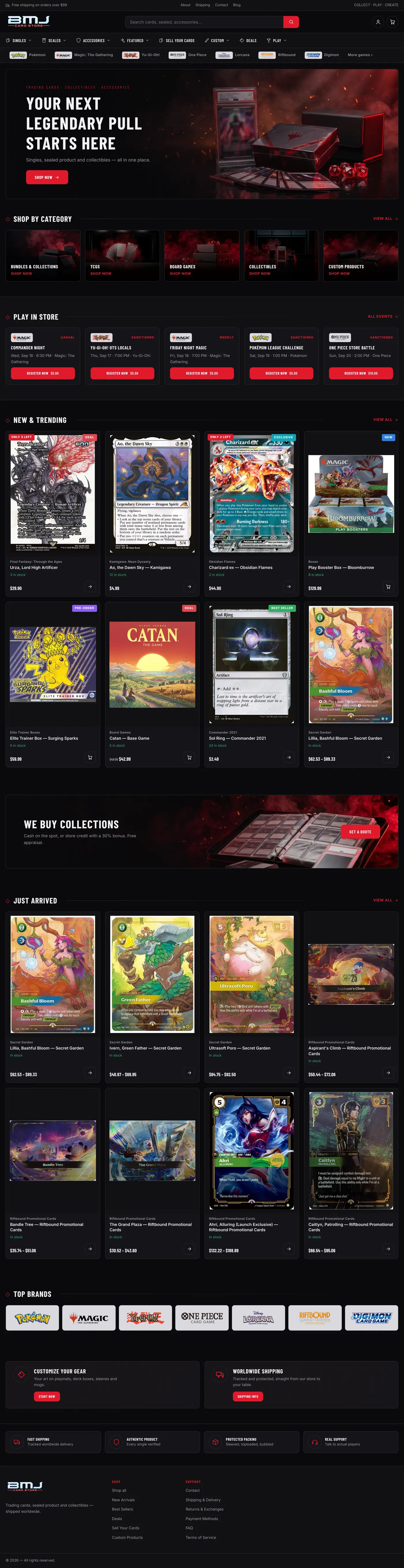
The problem
Card shops abroad usually run on generic platforms that do not understand cards. The problem is always the same data model: the platform treats a card as a single product, when in reality one card has many printings, and each printing has many conditions, each with its own price and stock.
Without that solved, the shop owner ends up hostage to spreadsheets, and the customer never knows whether what they want is actually available.
What I built
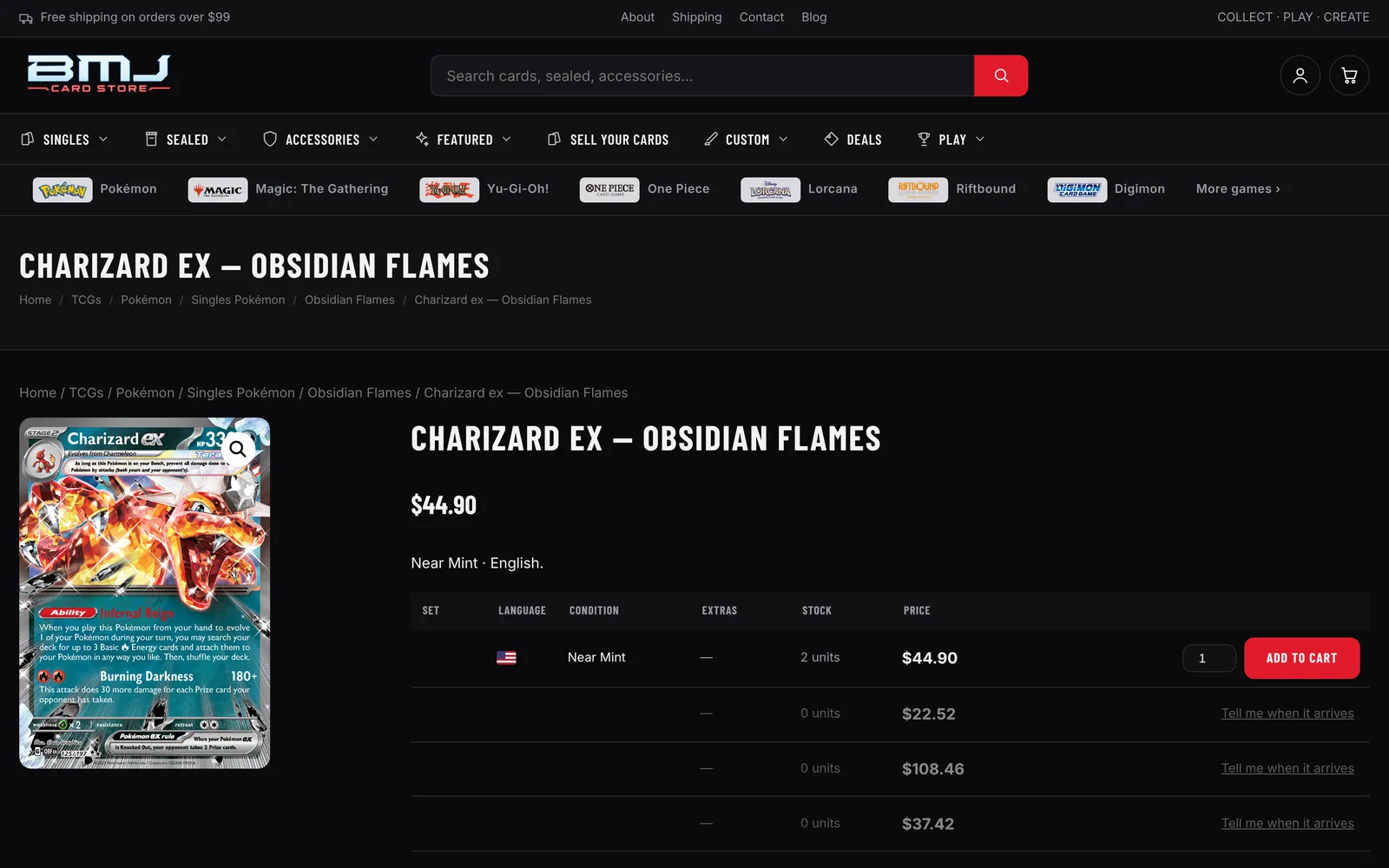
The data model is the product. Card leads to printing, printing leads to condition, and each variant carries its own price and stock. The product page shows the table of every printing of that card, with stock per variant and a button that switches between "add to cart" and "tell me when it arrives" as appropriate.
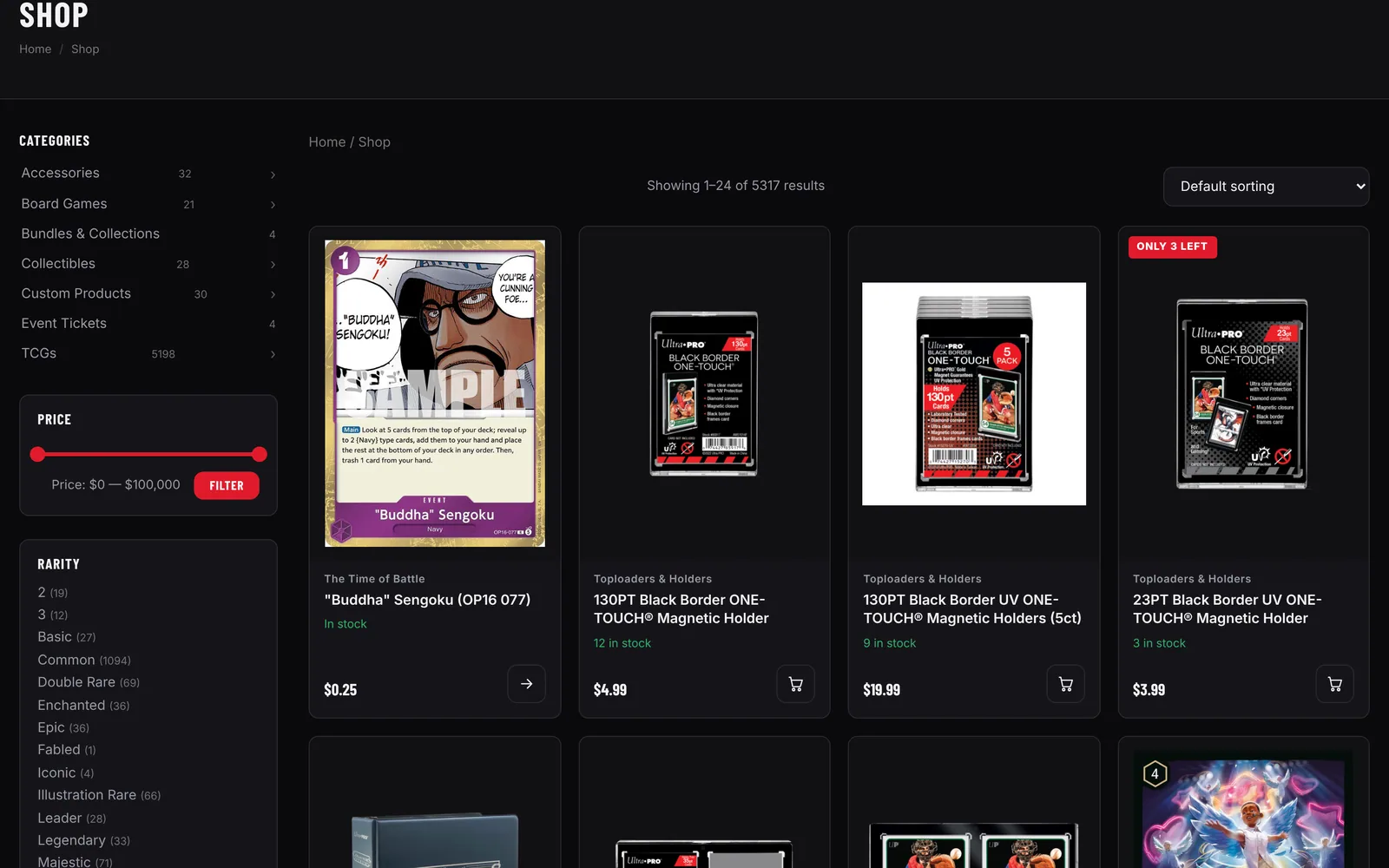
Around that sit the things a card shop needs and a generic shop does not have: a buylist that quotes on the spot, in cash or in store credit with a bonus; ticketed events with seats; filters by rarity, set and condition with real counts; and custom products with artwork upload and proof approval.
A buylist that quotes on the spot
The customer builds the list of what they want to sell and sees the cash value and the store credit value on screen, with the bonus applied. The quote is an estimate and the site says so, with the final offer confirmed after the cards are checked.
Ticketed events are retention
Commander Night, FNM, Pokémon league and store battles are listed with date, time, game and price, with registration going straight to checkout. A card shop lives on the player who comes back every week.
Inside
Project documentation
Art direction
This is a sales model, not a client site, and the art was made for that: everything a card-game retailer recognises in ten seconds — card search, condition, per-unit stock, buylist — placed above the fold. Black with an orange accent so it resembles none of the shops they already know, and so they can picture their own brand in its place.
Palette
No palette documented here: the site was down when this was written, and I do not record hex values from memory.
Why this stack
WooCommerce for the same reason as JOS — the retailer has to run it themselves — with the card data model at the centre: one card, four conditions, stock tracked per condition, and pricing the owner can move across a whole set at once. That model is what I license; the shop around it is the demonstration.
Details
Why it exists
A PDF proposal does not sell a system to a retailer. A live site they open, search a card in and understand in thirty seconds, does.
In numbers
What was built, counted on the site itself.
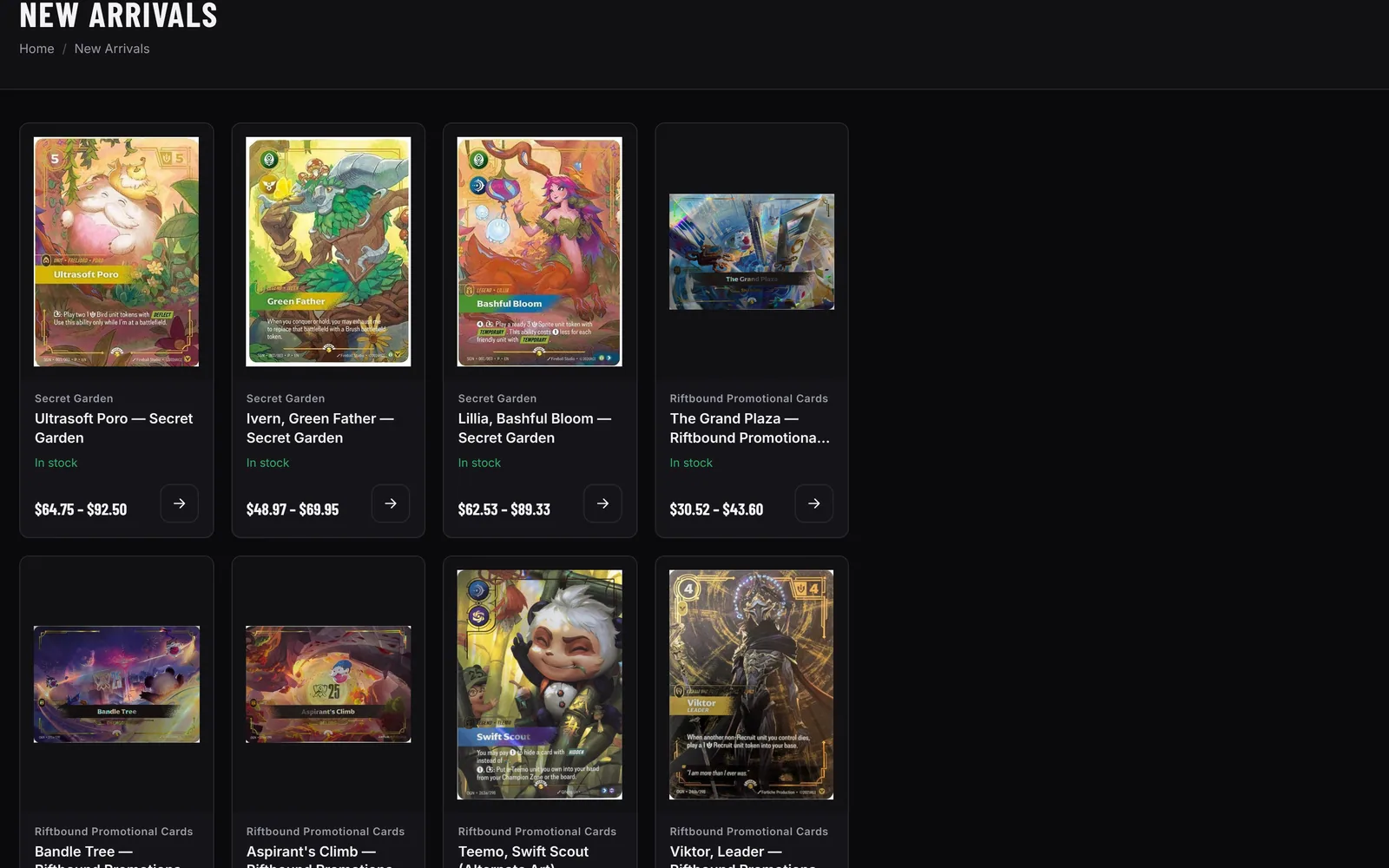
card games in the catalogue, from Magic and Pokémon to One Piece and Riftbound
rarities available as filter facets, with real stock counts
revenue streams covered: sales, buylist, events and custom products